Loading
← Back to Blog
Kitting and Bundling Services: What They Are and When to Use Them
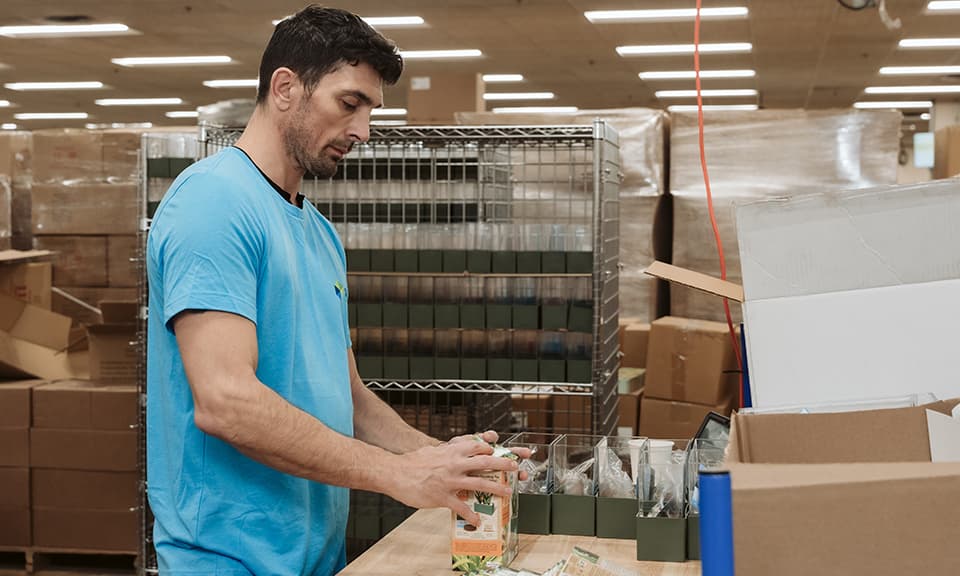
Selling individual products is not always the most effective way to increase order value, simplify promotions, or create a better unboxing experience. Many eCommerce brands combine related items into subscription boxes, gift sets, promotional packs, starter kits, or marketplace-ready bundles.
Professional kitting and bundling services help businesses assemble multiple products into one sellable or shippable unit before an order is placed. Instead of asking warehouse staff to locate and combine separate items each time a customer orders, completed kits can be prepared in advance, assigned a unique SKU, stored, and shipped through a controlled fulfillment process.
This guide explains how product kitting works, how it differs from bundling, when businesses should use it, and what to look for in a reliable fulfillment partner.
What Are Kitting and Bundling Services?
Kitting and bundling services involve combining two or more individual items into one packaged unit for storage, sale, promotion, or shipment.
A warehouse may receive products separately, inspect them, assemble the required combination, apply labels or packaging, and enter the completed kit into inventory under a new SKU.
Common examples include:
Subscription boxes
Gift sets
Product launch kits
Sample packs
Starter kits
Influencer mailers
Multi-packs
Promotional bundles
Employee onboarding boxes
Marketplace bundles
Product-and-accessory combinations
A professional product kitting service creates a repeatable assembly process so every kit contains the correct products, quantities, packaging materials, labels, and inserts.
What Is the Difference Between Kitting and Bundling?
Kitting and bundling are closely related, but the terms may describe slightly different workflows.
What Is Product Kitting?
Kitting usually involves assembling several separate components into one new product or fulfillment unit.
For example, a skincare starter kit may include:
One cleanser
One serum
One moisturizer
One instruction card
One branded box
The completed kit may receive its own SKU and be stored as a finished product.
What Is Product Bundling?
Bundling usually refers to selling multiple existing products together as one offer.
For example, a seller may offer:
Buy two, get one free
A shampoo and conditioner set
A three-pack of the same product
A laptop sleeve with a wireless mouse
A holiday gift bundle
Some bundles are assembled in advance, while others are created after an order is placed.
Kitting vs Bundling at a Glance
FeatureKittingBundlingMain purposeCreate a new assembled unitSell multiple products togetherNew SKUCommonly usedMay or may not be usedAssembly timingUsually before the orderBefore or after the orderPackagingOften customizedMay use standard packagingCommon use casesSubscription boxes, kits, samplesMulti-packs, promotions, cross-sellsWarehouse complexityOften more detailedUsually simpler but varies
In practice, many fulfillment providers use the terms together because both require accurate component management, assembly, packaging, and inventory tracking.
How Kitting and Bundling Services Work
A structured kitting operation normally includes several stages.
1. Inventory Receiving
Individual components arrive at the fulfillment center and are checked against purchase orders.
The receiving team may verify:
Product quantities
SKU accuracy
Visible damage
Packaging condition
Expiration dates where relevant
Barcodes
Lot or batch details
Missing components
Accurate receiving is important because a kit cannot be assembled correctly if the starting inventory records are wrong.
Learn more about the eCommerce inventory receiving process and how accurate unit verification supports downstream fulfillment.
2. Kit Configuration
The seller provides clear instructions for the kit, including:
Required products
Quantity of each component
Assembly sequence
Packaging materials
Labels
Inserts
Barcode requirements
Quality-control checks
Finished-kit SKU
A clear bill of materials helps the warehouse understand exactly what belongs in each unit.
3. Component Picking
Warehouse staff retrieve the individual items required to build the kit.
Depending on the setup, the team may pick components in batches to improve efficiency. For example, staff may assemble 500 identical gift boxes during one production run.
4. Kit Assembly
The components are placed together according to the approved instructions.
A custom kit assembly service may include:
Folding boxes
Inserting products
Adding tissue paper
Applying stickers
Placing instruction cards
Adding samples
Sealing packages
Shrink-wrapping
Applying barcodes
Preparing cartons
5. Quality Control
Completed kits should be checked before they enter available inventory.
Quality-control steps may confirm:
Correct products
Correct quantities
Proper orientation
Accurate labels
Secure packaging
Clean presentation
No visible damage
Correct promotional inserts
6. Inventory Update
The individual component quantities are reduced, and the completed kit quantity is added to inventory.
This step is essential for preventing overselling and understanding how many additional kits can be built.
Strong eCommerce inventory management helps sellers track both individual products and assembled kits across their sales channels.
7. Order Fulfillment
When a customer orders the kit, the warehouse treats it as one ready-to-ship unit.
The order then moves through the usual pick and pack fulfillment process, including verification, packing, labeling, shipping, and tracking.
Common Types of Kitting and Bundling Services
Subscription Box Kitting
Subscription businesses often ship a recurring combination of products each month or quarter.
A kitting warehouse may assemble:
Beauty boxes
Snack boxes
Wellness kits
Book subscriptions
Hobby kits
Pet-product boxes
Educational activity packs
The challenge is maintaining accuracy while products, inserts, and monthly themes change.
Promotional Bundle Assembly
Brands may create limited-time bundles around:
Holidays
Product launches
Seasonal campaigns
Influencer partnerships
Customer loyalty offers
Clearance promotions
Event giveaways
Pre-assembled bundles can reduce packing delays during high-volume promotions.
Marketplace Bundle Preparation
Amazon and Walmart sellers may combine related products into a single marketplace listing.
These kits may require:
Unique barcodes
Proper labeling
Secure packaging
Bundle warnings
Product separation
Marketplace-compliant preparation
Sellers preparing inventory for Amazon can review Amazon FBA prep service requirements, while Walmart sellers can learn more about Walmart WFS prep services.
Gift Set Assembly
Gift sets often require greater attention to presentation.
Assembly may involve:
Branded packaging
Tissue paper
Ribbons
Cards
Product sleeves
Custom inserts
Premium boxes
This type of co packing and kitting can help brands create a polished customer experience without building an internal assembly team.
Sample and Trial Kits
Sample packs allow customers to test multiple products before purchasing full-size versions.
Common uses include:
Cosmetics
Skincare
Food products
Supplements
Fragrances
Cleaning products
Office products
Product-and-Accessory Kits
Brands may combine a main product with the accessories required to use it.
Examples include:
Electronics with cables
Fitness equipment with resistance bands
Coffee makers with filters
Cameras with memory cards
Furniture with hardware
Craft supplies with tools
Retail-Ready Kits
Retail kits may require:
Product inserts
Hang tags
Barcodes
Shelf-ready packaging
Price labels
Display boxes
Case packing
Benefits of Kitting and Bundling Services
Faster Order Processing
Pre-assembled kits can be picked as one unit instead of several separate products.
This reduces the number of warehouse touches required for each order and may help improve processing speed during high-volume periods.
Fewer Packing Errors
A standardized assembly process can reduce the risk of missing products, incorrect quantities, or inconsistent packaging.
Batch-level quality checks make it easier to identify errors before the kit reaches a customer.
Higher Average Order Value
Bundles can encourage customers to purchase more products within one transaction.
Examples include:
Starter kits
Complete routines
Product collections
Buy-more-save-more bundles
Seasonal gift sets
Product and refill combinations
A carefully planned bundle should provide clear customer value rather than simply grouping unrelated items.
Better Inventory Movement
Kitting can help businesses combine slow-moving products with popular items, introduce samples, or create new offers from existing inventory.
However, sellers should avoid using bundles to hide low-quality or unwanted products. The offer should still make sense to the customer.
Improved Customer Experience
Well-designed kits can create a more convenient and memorable buying experience.
Customers receive everything they need in one package rather than ordering several products separately.
Easier Product Launches
Launch kits can help brands coordinate:
New product samples
Instructions
Accessories
Promotional materials
Branded packaging
Influencer outreach
A reliable bundle assembly fulfillment workflow can prepare inventory before the campaign begins.
Reduced Internal Labor
Outsourcing kitting can reduce the need for brands to manage:
Temporary assembly staff
Extra warehouse space
Packing tables
Packaging storage
Quality-control processes
Inventory adjustments
Shipping coordination
This allows internal teams to focus on product development, customer acquisition, and growth.
When Should You Use Kitting and Bundling Services?
Professional kitting may be useful when:
You sell subscription boxes.
You regularly create gift sets.
You run seasonal promotions.
Your orders contain repeated product combinations.
You sell bundles on Amazon or Walmart.
Your team spends too much time assembling kits manually.
You need consistent branded packaging.
You are launching a new product.
Your warehouse cannot manage complex assembly.
Packing errors are increasing.
You want to increase average order value.
You need scalable production during peak periods.
When Kitting May Not Be the Best Choice
Pre-assembly may not be suitable for every business.
It may be less effective when:
Bundle demand is unpredictable.
Products expire quickly.
Kit contents change with every order.
Individual components sell faster separately.
Assembly costs exceed expected margins.
Packaging requirements are still being tested.
The kit creates unnecessary inventory complexity.
In these situations, on-demand bundling may provide more flexibility than pre-assembling large quantities.
Pre-Kitting vs On-Demand Kitting
Pre-Kitting
Pre-kitting means assembling inventory before customer orders are received.
This may work well when:
Demand is predictable
The bundle remains consistent
Order volume is high
Fast dispatch is important
Promotional dates are fixed
Advantages include faster order processing and simpler picking.
The main risk is assembling more kits than the business can sell.
On-Demand Kitting
On-demand kitting means assembling the bundle after an order is received.
This may work well when:
Kit combinations vary
Demand is uncertain
Products also sell individually
Personalization is required
Inventory flexibility is important
The main trade-off is additional order-processing time.
Kitting for eCommerce Brands Across Multiple Sales Channels
Many businesses sell through Shopify, Amazon, Walmart, eBay, and other channels at the same time.
Kitting for eCommerce brands becomes more complex when each platform uses different:
SKUs
Barcodes
Packaging rules
Shipping requirements
Bundle listings
Inventory records
Customer expectations
A centralized fulfillment operation can help connect bundle inventory across multiple channels.
For example:
Amazon bundles may require marketplace-compliant labeling.
Walmart bundles may require WFS preparation.
Shopify kits may include branded packaging.
Wholesale kits may require bulk cartons.
Subscription boxes may require recurring assembly schedules.
Read more about multi-channel order fulfillment and how businesses can coordinate Amazon, Walmart, Shopify, and other order sources through one operation.
How Kitting Affects Inventory Management
Kitting introduces an additional inventory layer because each finished unit depends on several components.
For example, one kit may contain:
Two Product A units
One Product B unit
One instruction card
One branded box
Even when 100 boxes are available, the warehouse may only be able to build 40 kits if Product B has limited stock.
A reliable inventory system should track:
Individual component stock
Finished kits
Reserved inventory
Damaged products
Available-to-build quantities
Work in progress
Returned kits
Replacement components
This helps sellers understand the true number of kits available for sale.
Kitting and Bundling Cost Factors
The cost of kitting varies depending on the complexity of the project.
Common factors include:
Number of components
Assembly time
Packaging materials
Folding or box construction
Label application
Barcode generation
Custom inserts
Product inspection
Shrink-wrapping
Sealing requirements
Personalization
Quality-control steps
Production volume
Storage requirements
A simple three-product bundle may cost less to assemble than a subscription box with ten items, custom tissue paper, multiple inserts, and detailed presentation requirements.
Before approving a project, request a written estimate that explains:
Per-kit assembly fees
Material costs
Setup fees
Storage fees
Receiving fees
Labeling fees
Quality-control charges
Rework fees
Minimum production quantities
How to Choose a Kitting Warehouse Provider
A reliable kitting warehouse provider should be able to manage both physical assembly and inventory accuracy.
Evaluate the following areas.
Experience With Your Product Type
Ask whether the provider has handled similar kits, products, or packaging requirements.
Fragile products, cosmetics, electronics, apparel, food items, and subscription boxes may require different workflows.
Clear Assembly Instructions
The provider should be able to follow a documented bill of materials and repeatable standard operating procedure.
Quality-Control Process
Ask how the warehouse verifies:
Product identity
Quantities
Packaging
Labels
Finished presentation
Damaged items
Assembly accuracy
Inventory Visibility
You should be able to understand how many components, completed kits, and available-to-build units remain.
Marketplace Preparation
Confirm that the provider can support Amazon, Walmart, Shopify, and your other active sales channels.
Scalability
The provider should be able to manage increased production during product launches, seasonal campaigns, and holiday periods.
Returns Handling
Ask how returned kits are inspected and whether reusable components can be restocked.
A complete eCommerce returns management process can help businesses recover usable inventory and maintain accurate records.
Fulfillment Capabilities
Kitting is only one part of the customer journey. The provider should also be able to receive, store, pick, pack, ship, and process returns.
Explore PackShip Pro’s complete eCommerce fulfillment services to understand how kitting can connect with inventory receiving, order processing, marketplace preparation, shipping, and returns.
Common Kitting and Bundling Mistakes
Building Too Many Kits in Advance
Pre-assembling excessive inventory can make products unavailable for individual sale.
Start with a realistic forecast and review demand before creating large batches.
Using Inconsistent SKUs
Every component and completed kit should have a clear identifier.
Poor SKU structure can create inventory errors and incorrect shipments.
Ignoring Packaging Dimensions
A bundle may increase shipping costs if the packaging is too large or heavy.
Test the finished package before committing to production.
Missing Marketplace Requirements
Incorrect labels, warnings, or packaging can delay marketplace shipments.
Confirm Amazon or Walmart requirements before assembly begins.
Weak Quality Control
One missing component can damage the entire customer experience.
Use checklists, scanning, and sample inspections during production.
Failing to Plan Returns
A returned bundle may include missing, damaged, or opened components.
Define whether the warehouse should:
Restock the full kit
Break it into components
Quarantine it
Dispose of it
Photograph it
Report missing items
Creating Bundles Without Customer Value
A bundle should solve a problem, simplify a purchase, or provide a meaningful benefit.
Combining unrelated products may not increase conversions.
Frequently Asked Questions
What are kitting and bundling services?
Kitting and bundling services combine multiple products or components into one sellable, promotional, or shippable unit. The process may include picking, assembly, labeling, custom packaging, quality control, inventory updates, and fulfillment.
How does a product kitting service manage inventory?
A product kitting service tracks both the individual components and the completed kits. When kits are assembled, component quantities are reduced and finished-kit inventory is added under the appropriate SKU.
What is included in bundle assembly fulfillment?
Bundle assembly fulfillment may include receiving products, picking components, assembling bundles, applying labels, adding inserts, performing quality checks, storing completed units, shipping orders, and processing returns.
When should I use a custom kit assembly service?
A custom kit assembly service may be useful for subscription boxes, gift sets, product launches, promotional bundles, influencer mailers, marketplace kits, sample packs, and product-and-accessory combinations.
How do I choose a kitting warehouse provider?
Choose a kitting warehouse provider based on assembly experience, quality-control procedures, inventory visibility, marketplace capabilities, scalability, pricing transparency, shipping support, and returns management.
Conclusion
Kitting and bundling services help eCommerce businesses turn separate products into organized, ready-to-sell offers.
A structured kitting process can improve:
Order-processing speed
Assembly accuracy
Inventory control
Customer presentation
Promotional flexibility
Marketplace readiness
Average order value
Operational scalability
The right workflow depends on your products, sales channels, expected volume, packaging requirements, and whether kits should be assembled in advance or after an order is placed.
Before selecting a provider, confirm that it can manage receiving, component tracking, assembly, quality control, fulfillment, and returns through one coordinated operation.
Simplify Your Kitting and Bundle Fulfillment
Whether you are preparing subscription boxes, promotional kits, marketplace bundles, gift sets, or custom product combinations, PackShip Pro can help manage assembly and fulfillment through one reliable process.
Request a custom kitting and bundling quote to discuss your products, assembly requirements, packaging, order volume, and sales channels.